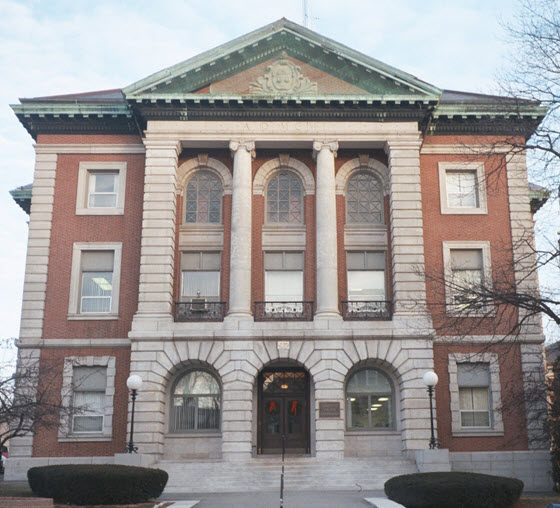
I must say in reflecting back on the second session of the 124th Legislature there was not a great deal of rancor. The Speaker again managed the calendar very well and we spent very few days in session after 4pm. We managed to complete out work so that we adjourned almost a week early which saves the taxpayers of Maine about $40,000 per day according to estimates we have received from legislative sources that track such information. The most difficult issues were handled in committee hearings and work session, for my part on the Labor Committee it was addressing issues like paid sick leave, vacation pay,reworking the issue of independent contractor status and issues related to bonded Canadian labor. Resolution was found to most of these as I noted in my previous post about the Labor Committee.
Work on the budget which reduce spending and cut state subsidies and revenue sharing to municipalities for a long and arduous process ably assisted by veteran Appropriations Committee members Rep. Sawin Millett, Rep. Bob Nutting, Rep. Pat Flood and Sen. Richard Rosen who worked tirelessly with their colleagues on the other side of the aisle, the governor’s office and Commissioner Ryan Low and other key committee members to hammer out a plan that would be reasonable and workable. The Leadership of Appropriation chairs Sen. Bill Diamond and Rep. Emily Cain were instrumental in managing the process and allowing for public in put during the course of the debate, as well as keeping members engaged and on task. The matter of bonds raised its head again in late part of session and created some challenges. I will address this in more detail in a later post. Best to say that we agreed to disagree and threw it to the body to sort out. In hindsight the 124th Legislature helped Maine government to weather one of the toughest economic storms most of us have seen in our lifetime and come out of it in a fairly good state. That is not to say we don’t have problems on the horizon.
After much discussion at the Appropriations Committee there was not an agreement so the Democratic majority forwarded a package that included a total of $85 million dollars. Republicans who had reached an agreement last session to bond only $149 million this session declined to support this excessive level of borrowing. The result was after several late night votes on Thursday April 8th in both chambers which failed to reach the required 2/3 vote the Legislature recessed until Monday April 12th so leadership could negotiate a solution. The final package agreed to and directed by Senate Republicans offered a total of $57 million in new borrowing and a redirection of another $13 from previous approved bond funds towards projects.
Here is a summary of the bond package that was approved:
• Nearly $25 million for highway maintenance and construction statewide.
• $9 million for rail improvements in Lewiston and to restore a western Maine rail line between Portland and Fryeburg.
• $6.5 million for a deep-water ship berth in Portland.
• $5 million for development of offshore wind power.
• $5 million for a new dental school and dental care programs in rural Maine.
Here is a link to the final package details http://www.maine.gov/legis/ofpr/
On Thursday January 21st, Governor John Baldacci delivered his eighth and final state. He noted that Maine was facing some extreme challenges and fiscal struggles. He spoke of the turmoil incumbent in these issues and the need to seek new solutions and new directions for our state government, our industries and our economy.
Within this message was a call to address our energy needs and break our dependence on foreign oil. Another component of his address was the need to improve Maine’s home energy needs through weatherization. He spoke of the promising opportunities in wind power and its auxiliary industries.
He also spoke of the importance of changing our state government and his efforts to consolidate services and departments. He referenced the number of jobs supposedly eliminated from state employment and the cuts to funding. The changes incumbent in this course has set many communities, school systems and counties on a new and uncharted path, the results are yet to be determined but the changes will offer some interesting opportunities for discussions and hopefully creative results.
Unfortunately at one point the governor felt a need to inject a sharply political point into his address and advocate against the upcoming June referendum on the tax package passed by the Democratic members of the Legislature on the final day on last session. I feel although it was his right to speak to this matter it was an inappropriate moment to inject a political announcement into his address on the state of our state.
The Governor also spoke to some other issues related to health and wellness, the tradgey in Haiti and Mainer’s who have been serving overseas in the mid-East. He touched on the large amount of Maine lands now in conservation and a plan being worked on
Below is a link to read the text of his address:
http://www.maine.gov/tools/whatsnew/index.php?topic=Gov_Speeches&id=89383&v=Article
During the second session we on the Joint Committee on Labor had a fairly small agenda but, it contained some very large issues.
There were several matters to make technical changes to issues relating to the retirement system and unemployment as it related to federal legislation. We also saw proposals to change the minimum wage, more enforcement authority for the workers comp commission, changes to how unemployment is paid in relationship to use of vacation time and issues relating to bonded laborers in the forest industry.
Early in the sessio nwe were informed of a problem relating to legislation we approved at the end of last year LD 1468 was a clearer definition of independent contractors. The result was a new form for pre-determination which required far more data, including 3 years of tax returns and a filing on a per job basis as opposed to the prior process which allowed for annual pre-determinations. This caused much consternation and confusion in the construction industry as many saw this as a added burden which did little to improve the process. After much deliberation and several meetings with stakeholder groups a good resolution was found and a committee bill was drafted to correct the problem.
The most visible issue was the discussion of Senate president Elizabeth Mitchell’s bill LD 1665 titles an Act to Prevent the Spread of the H1N1 Virus" which was commonly referred to as "paid sick leave". It generated the largest turnout for a public hearing with many business and industry representatives in attendance. The sponsors and the national group heading the effort lobbied aggressively but failed to bringing compelling evidence of real problems here in Maine. Unfortunately they chose to try and push their way through with a twice amended bill while not reasonably engaging in discussions with the Maine business community. The result was a decision by the Labor Committee to vote it out with a majority report of "Ought Not to Pass". This sent a strong message to the full Legislature that the bill had limited merit in its present form. To me this showed an example of how the business community can effectively express themselves on issues of concern and how the process will work well in limiting legislation that does not respect our state. I feel many efforts like this to use Maine as a platform for social experiments in launching "first in the nation" landmark bills only works when there is a true and broad problem affecting Maine people.
Overall this session’s Labor Committee continued in its efforts to hear legislation and come to a decision in a thoughtful and respectful manner. My thanks to my colleagues on the committee and my compliments to the chairs for the manner in which they conducted themselves. I want to give special thanks Rep Tuttle for his willingness to take some positions which were difficult but appropriate during these challenging times.
We begin the second session of the 124th Legislature on January 6th. During the coming months we will face some serious challenges. A budget shortfall of more that $400 million dollars, issues relating to school consolidation, the environment, labor and wage bills and the need to correct language on some laws enacted during the first session which have had difficulties in implementation. This is the peril of pushing through legislation to meet a self proclaimed deadline, as opposed to assuring the issue has been properly reviewed and the concerns of various parties have been considered, including those of the end users who must apply the results of the new law.
Two good examples of this were a bill to require all rental units and homes sold after Oct 31st 2009 to have a functioning carbon monoxide detector installed. There is no doubt that this can be a real and concerning life safety matter, however in the rush to pass the final version many changes were made which left unanswered questions as to how to enforce the new statute.
We also passed legislation to prevent the unauthorized use of information regarding minors, it was to prevent various entities from misusing data acquired from publicsources. The final version of the bill has caused concerns from legitimate organizations such as colleges seeking to work with those applying for entrance and even news organizations seeking to publish students information for athletic or academic accomplishments. We are regularly told by some we can’t let “perfect be the enemy of good legislation” however my thoughts are that we sometimes rush to complete a bill before it has been properly reviewed and considered by many parities who will have to apply the “unintended consequences” of our action.
All in all this second session promises to offer many challenges as we seek to do the people’s business in an uncertain economy.
Our class began with an opening retreat at Camp Wavus in Jefferson and has included trips to locations in Piscatiquis, and Kennebec Counties to tour and learn about different parts of our state’s economy. We will also visit manufacturing businesses in south western Maine, travel to Bath Iron Works shipyard, participate in forums on health care and Maine’s energy needs and then hold a session in Augusta where we will participate in a mock Legislature.
- St. Joe’s Soccer clinches 2009 GNAC Championship
- Andre, Grace & Gerald
One of the the great joys in a parents life is to see your children grow and achieve success in their lives. All three of ours are now young adults. Grace has completed college and is working in Washington DC. She has a position working at the Republican National Committee helping with the next National Convention. Andre & Gerald are attending St. Joseph’s College where they both are members of the men’s soccer team. Gwen and I had a wonderful fall as we travelled around watching the team progress through a very good season. It was not without some challenges including last spring’s announcement that the college had to reduce expenses which resulted in the coach’s full time position being cut. A new part time coach stepped in during the summer and life when on. These young men turned adversity into triumph as they went on to win their conference title and be selected for an NCAA playoff berth. During which they set 21 team and individual records.
Below is an article from the Bangor Daily News.
Brothers help St. Joseph’s into NCAA tourney
Cushings and Monks join Division III field
BDN Staff
St. Joseph’s College of Standish will be making its first NCAA Division III Tournament appearance in men’s soccer after winning the Great Northeast Athletic Conference tourney title.
And two brothers from Hampden, senior Andre Cushing and freshman brother Gerald, have played key roles for the 14-7-1 Monks.
St. Joseph’s will travel to play Wesleyan (Conn.) on Saturday.
“They’ve both had a huge impact on our team,” said Monks coach Steve Babineau. “Andre was a first team all-conference choice. He scored some great goals and had a bunch of assists. With his work ethic, he leads by example in training and in games.
“Gerald has come such a long way since day one. He’s a great young man who is always working hard and always asking what can he do to get better,” Babineau said. “He’s willing to play different positions and he competes with the best of them.
“We’ve used him at outside midfield and in the back and he’s done well,” he added.
“This [title] has been something we’ve been working for over the past three years,” said Andre Cushing, who has scored two goals and notched four assists. “We felt we should have won it last year so we’ve played with a chip on our shoulders this year.”
He said being named All-GNAC was nice “but it was a collective team effort. I was just able to make some key plays in key situations. It’s a reflection on how well we’ve played together.”
He said he has been motivated by a heartbreaking 3-2 loss to Greely of Cumberland Center in the 2004 Class A state title game, in which Hampden squandered a 2-0 lead. He has also been motivated by a frustrating 2008 season.
“That [Greely] game has been eating at me for five years and I told the guys [in the 2-1 GNAC title game win over Emerson] that wasn’t going to happen to us,” said Cushing.
He said he didn’t play as well as he wanted to last season “but I’ve been more consistent this year.”
Cushing added that the season has been “very rewarding” and getting to share it with his brother has added to it.
“It’s cool. He was a JV when I was a senior at Hampden Academy. It’s nice to share something like this with him,” said Andre Cushing.
I was selected in August to attend the Council of State Government- Eastern Region Conference in Burlington, VT. as a member of the Maine Delegation. This annual conference brings together legislators and state department heads from all New England and other states as far south as Maryland with the Candadia n provinces and Puerto Rico to discuss issues of mutual concern and share ideas on policy and means of cooperating on matters of regional interest. THe event rotates to one of the ten different states each year and Maine will be the 2010 host. This will be a special event as it is the fiftieth anniversary of CSG. I am a member of the organizing committee and we are working hard to assure this will be a memorable event that will encourage others to visit Maine again and perhaps showcase some of our wonderful businesses and university campuses.
After a busy session we ended on a relatively quiet note. Speaker Pingree and the House Leadership did an outstanding job of managing the calendar to get legislation processed while being respectful of our time. I don’t believe we were in session after 5pm more than three days. The final week we were able to accomplish much by the afternoon break. The final night was a bit long as we awaited final action by the Senate so we could then ajourn sine die, which in Latin means “without day” (A legislative body adjourns sine die when it adjourns without appointing a day on which to appear or assemble again.).
The only unfortunate part of this final week was the Democratic effort to run through a tax increase on the last day of session. This was the result of passage of LD 1088,
“An Act To Modernize the Tax Laws and Provide over $75,000,000 to Residents of the State in Tax Relief”. This bill was run through the hearing process and passed by primarily Democratic party line vote.
Governor Baldacci declined to sign the legislation as presented so an intense effort to negoiate a compromise was undertaken by Democratic leaders bent on passing a bill before the end of session. The result was a proposal, LD 1495 “An Act To Implement Tax Relief and Tax Reform”. This legislation was deposited on our desk 15 minutes before a vote was expected. There was not the customary public hearings nor even a review by the full Taxation Committee. It was an last minute attempt to craft tax reform in a very closed environment.
On a strict Democratic vote it passed the House and won the support of only one Republican, Sen. Peter Mills, in the Senate.
Following the Governor signing the bill a coalition of concerned legislators and citizen’s mobilized a petition drive to allow Maine voters a chance to have a say on the newly passed tax bill. Over a short time more than 70,000 signatures were collected and in September they were submitted to the Secretary of State for review and certification. After a delay which resulted in a lawsuit being filed by the group’s spokesman Charles Webster the courts found the Secretary of State had not properly fulfilled his duties and ordered that the petitions be certified. The vote will take place in June of 2010.
I spent a busy summer working on personal and family business and dealing with some items on my Legislative schedule. Not too many trips to Augusta were necessary but we did have some hearings before the LAbor Committee for Gubernatorial appointments.
Governor Baldacci delivered his 7th State of the State address on Tuesday March 10th. Below is a link to the text of his speech if you would like to review it:
http://www.maine.gov/tools/whatsnew/index.php?topic=Gov+News&id=69160&v=Article-2006